
Delivery and conservation of raw hides
Upon arrival at the tannery, raw hides are pickled or chilled to prevent degradation. High-quality preservation at this stage determines the durability of the final leather. Only well-conserved hides proceed to production.
Soaking, unhairing, and fleshing
Hides are submerged in water baths to remove dirt and restore moisture. They are then treated with a mild depilatory to remove hair, followed by mechanical fleshing to scrape away any remaining meat, fat, and tissue, leaving a perfectly clean base.

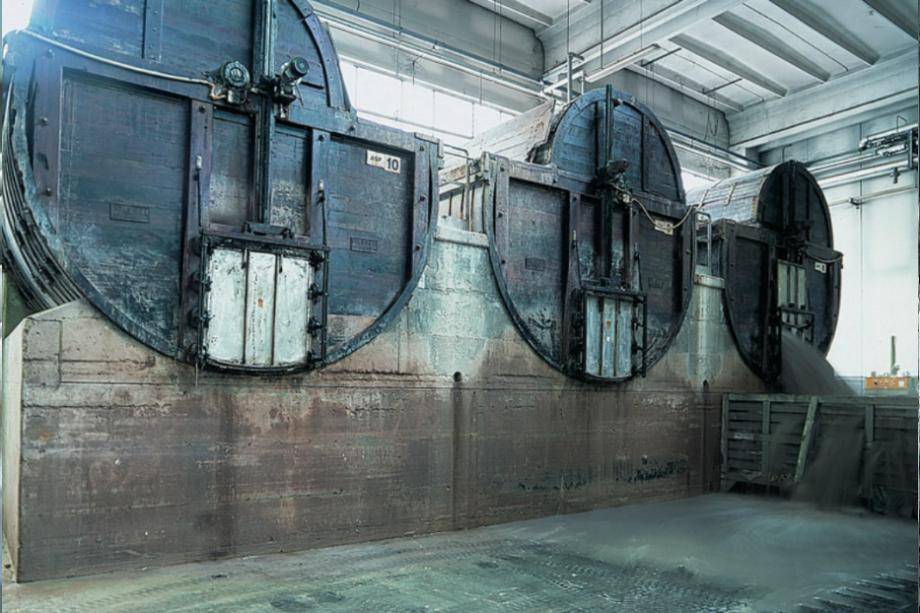
The tanning process
The tanning process transforms perishable hides into durable leather inside massive rotating drums. Tanning agents are added during continuous rotation, penetrating deep into the fibers. This process is strictly monitored to ensure perfect chemical balance and high quality.
Quality control and sorting
After tanning and dry-pressing, the hides undergo a preliminary inspection. Specialists examine them for natural imperfections and sort them into quality grades. Only pristine hides, free of scars and insect bites, are selected for premium applications.
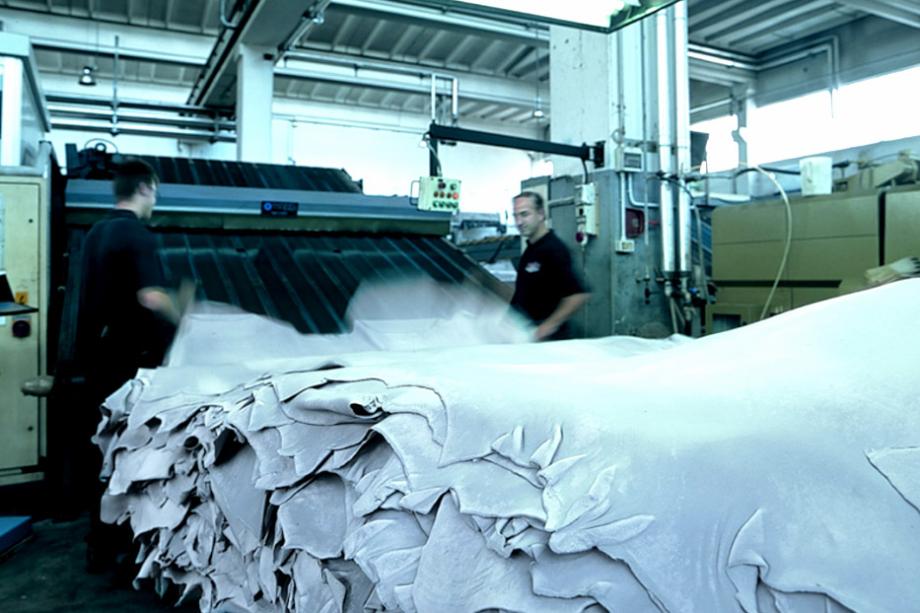

Shaving for uniform thickness
Because natural hides are inherently uneven, they must be reduced to a consistent thickness. The flesh side is mechanically shaved with precision. This ensures equal thickness and makes the leather lighter and more supple for further processing.
Retanning, dyeing, and fatliquoring
To determine its character, color, and softness, the leather returns to the drums. It undergoes retanning to optimize fiber structure, dyeing with premium aniline dyes, and fatliquoring with essential oils to prevent drying and achieve a soft touch.
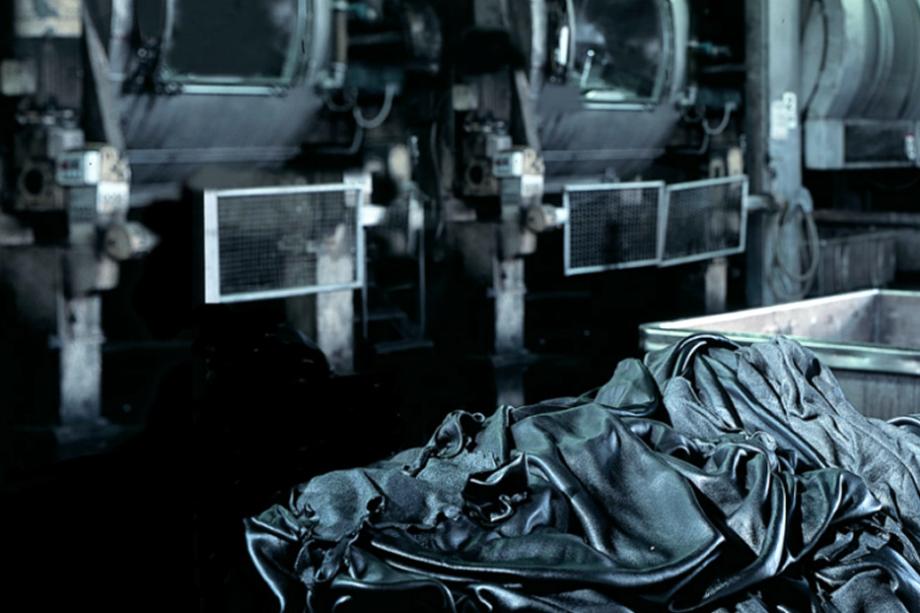

Surface finishing
During finishing, the leather receives its final protective and coloring layers. Automated spray cabins apply a fine, even pigment or lacquer. This enhances resistance to wear, dirt, moisture, and UV light without compromising the leather's natural appearance.
Final inspection and sorting
Once finished, every hide undergoes a visual and manual final inspection. Specialists assess color consistency, suppleness, thickness, and finish quality. The leather is then sorted according to client demands, ensuring only the best leaves the tannery.


Laboratory testing and quality assurance
A sample from every production batch is rigorously tested in a specialized laboratory. Tests assess tear strength, rub fastness, flammability, and temperature resistance. Every product must fully comply with strict international standards before being approved for sale.
